Evidence-Based Joint & Arthritis Rehabilitation in Moshi,

Pimpri-Chinchwad Protect vulnerable articular cartilage, restore joint fluid dynamics, rebuild shock-absorbing muscular capacity, and preserve physical independence without long-term medication dependency.

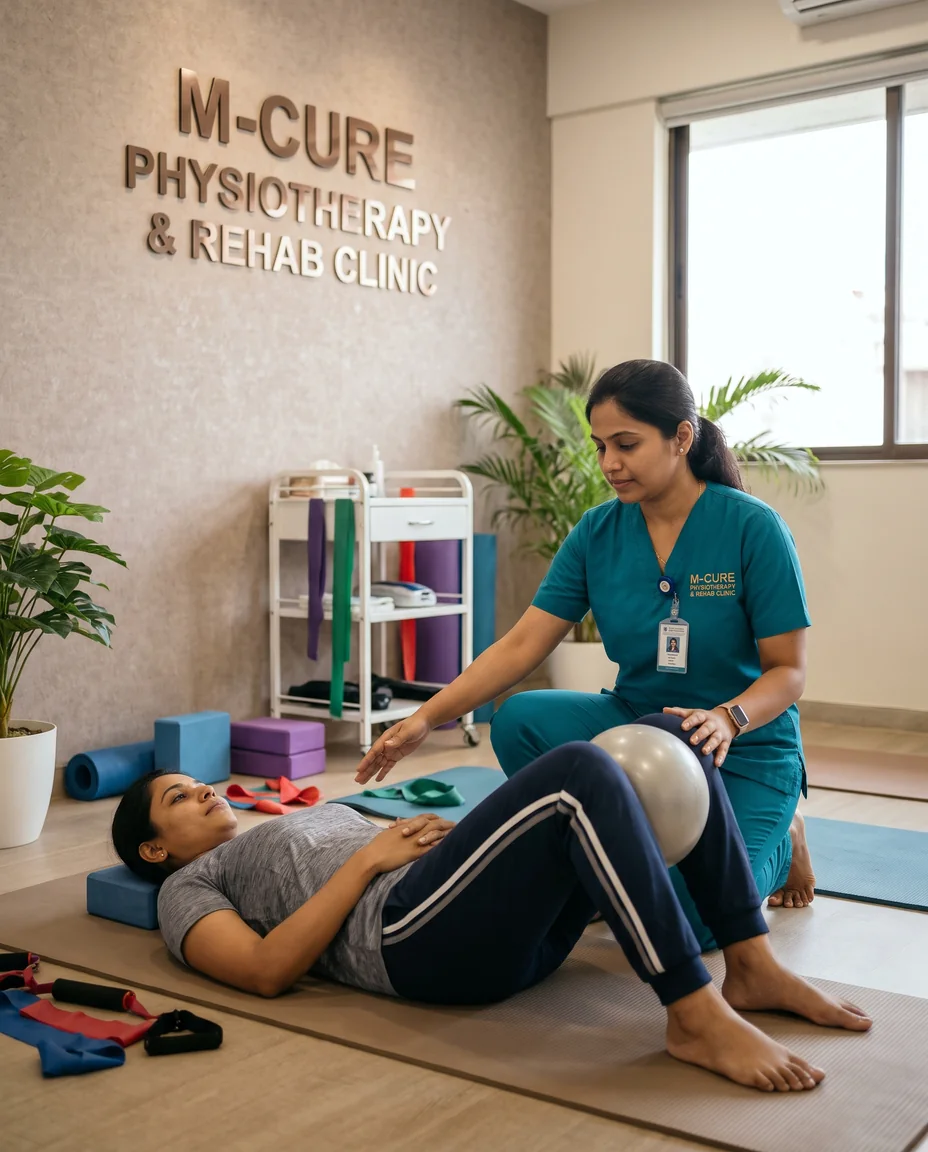
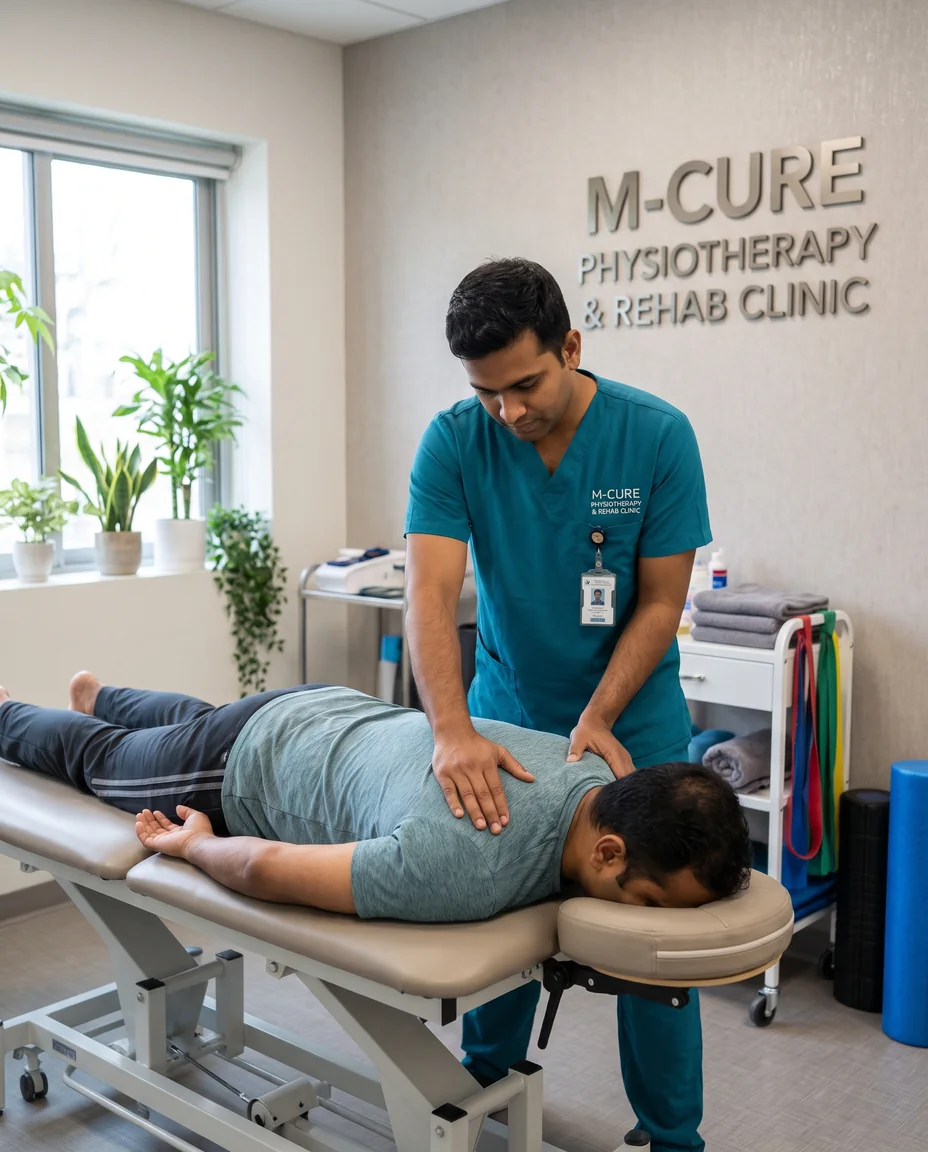
Degenerative joint disease and chronic inflammatory arthropathies are among the most widespread causes of daily physical limitation, morning stiffness, and progressive mobility loss across Pimpri-Chinchwad. For countless active adults, industrial retirees, and working individuals, joint pain is frequently treated as an inevitable consequence of aging to be managed with pain-relief gels, repeated analgesics, or premature surgical joint replacement. At M-CURE Physiotherapy and Rehab Clinic, located at Rama Heights on the Nashik-Pune Highway, we provide specialized non-surgical joint rehabilitation designed to alter joint mechanics, offload damaged cartilage, and restore long-term joint function.

Conveniently accessible for residents across Moshi, Spine Road, Sector 4 PCNTDA, Bhosari, Chikhali, Charholi, Alandi, and Dighi, our clinic offers structured clinical care aimed at preserving natural joints, delaying or avoiding surgery, and keeping you comfortably active in your home, workplace, and community.

The Pathophysiology of Arthritic Joint Degradation

Arthritis is an umbrella term encompassing over a hundred distinct clinical conditions, but mechanical joint breakdown follows predictable physiological pathways:

  • 1. Cartilage Starvation & Synovial Degradation. Articular (hyaline) cartilage possesses neither a direct vascular supply nor pain-sensing nerve fibers. It depends entirely on fluid
  • exchange. when a joint is loaded and unloaded through healthy movement, synovial fluid is pumped through the porous cartilage matrix, delivering glucose, amino acids, and oxygen while removing cellular metabolic waste. When pain leads to joint guarding and inactivity, this fluid pump stops. The cartilage dries, thins, and frays, while the synovial capsule thickens and contracts, resulting in the classic feeling of morning "rustiness" or stiffness.
  • 2. Subchondral Bone Remodeling & Crepitus. As hyaline cartilage erodes, underlying subchondral bone is subjected to unmitigated mechanical stress. The bone reacts by sclerosing (hardening) and developing osteophytes (bony spurs) along the joint margins to spread compressive forces. These irregular bony ridges and frayed surfaces grind during movement, creating audible and palpable sensations of cracking, clicking, or grating known as crepitus.
  • 3. The Muscular Shock-Absorber Failure. Under normal conditions, surrounding musculature—particularly the quadriceps and gluteal complex in the lower body—acts as an active shock absorber, dampening up to 40% of the ground reaction impact generated during each footstep. When joint inflammation reflexively inhibits these muscles (arthrogenic muscle inhibition), impact forces travel directly into the vulnerable bone ends, accelerating cartilage wear and triggering chronic inflammatory effusions.
  • At M-CURE, our joint preservation protocols focus on breaking this degenerative cycle. we re-engage the active muscular shock absorbers, gently mobilize the stiffened joint capsule, and redistribute joint forces to protect your remaining cartilage.

Complete Spectrum of Arthritic Conditions Managed at M-CURE Moshi

Our clinic provides stage-specific, evidence-based therapy across the complete spectrum of degenerative, systemic, and post-traumatic arthritic disorders:

Knee Osteoarthritis (Grades I through IV). Managing medial or lateral compartment narrowing, patellofemoral cartilage erosion, baker's cysts, and gait compensations. We focus on muscular offloading to relieve bone-on-bone friction and preserve functional knee flexion and extension.
Hip Osteoarthritis (Coxarthrosis). Relieving deep groin aching, buttock pain, and stiffness that limits hip internal rotation, making it difficult to put on footwear, climb stairs, or rise from low seating.
Rheumatoid Arthritis (RA). Delivering stage-appropriate clinical care tailored around systemic inflammatory cycles. During acute inflammatory flares, we protect delicate joint capsules, manage pain, and prevent joint deformities; during remission phases, we rebuild muscular endurance, bone mineral density, and joint stability.
Ankylosing Spondylitis (AS) & Axial Spondyloarthritis. Preventing spinal fusion and thoracic kyphosis through targeted spinal extension protocols, costovertebral joint mobilization, and diaphragmatic breathing routines to maintain chest expansion capacity.
Cervical & Lumbar Spondylosis. Decompressing arthritic facet joints in the neck and lower back, restoring intervertebral hydration, and relieving secondary radiating nerve pinches.
Small Joint Hand & Wrist Arthropathies. Specialized joint distraction, tendon-gliding exercises, and custom splinting for basal thumb (CMC) joint arthritis, Heberden’s/Bouchard’s nodes, and carpal stiffness to preserve grip and pinch strength.
Post-Traumatic Arthritis. Managing secondary joint degeneration that develops years after an intra-articular fracture, meniscal tear, or ligament rupture.

The M-CURE 4-Phase Joint Preservation Protocol

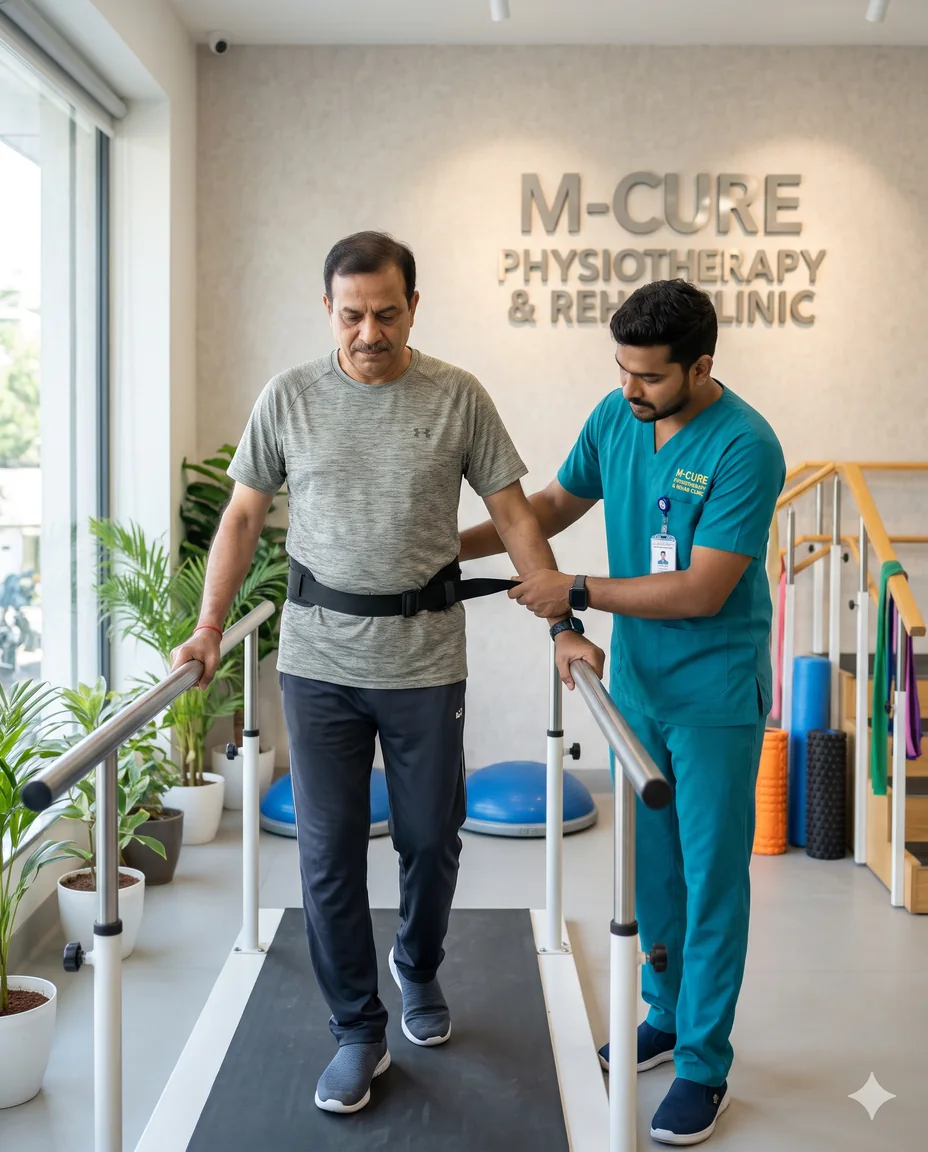
We do not use passive heat packs and ultrasound machines as substitutes for clinical rehabilitation. Every joint patient at M-CURE progresses through four criteria-driven recovery phases:

1

Joint Decompression & Synovial Fluid Stimulation

Before loading a stiff, painful joint, we must create intra-articular space and restore fluid circulation:

  • Manual Joint Distraction & Traction (Kaltenborn Grades I & II). Applying gentle, sustained axial separation to lower compressive forces inside the joint and relieve capsular tension.
  • Low-Velocity Passive Oscillatory Glides (Maitland Mobilizations). Mobilizing restricted joint capsules within pain-free boundaries to stimulate mechanoreceptors, down-regulate pain signals, and thin thick synovial fluid.
  • Cryo-Compression for Inflammatory Effusions. Using specialized cold-compression techniques to clear inflammatory joint swelling without triggering reflexive muscle spasms.
2

Isometric Kinetic Chain Fortification & Pain Modulation

During active arthritis, traditional high-impact loading causes sharp pain and joint flare-ups. We begin with non-provocative muscular activation:

  • High-Load Isometric Quadriceps & Gluteal Training. Static muscular contractions held at mid-range angles (such as 45-to-60-degree wall sits or seated multi-angle quad sets). Isometrics build muscular tension, increase tendon stiffness, and stimulate cortical pain relief without grinding worn joint surfaces together.
  • Hip Abductor & Pelvic Stabilizer Strengthening. Building strong gluteus medius and minimus muscles. Stable hip abductors prevent the pelvis from dropping during walking, which directly reduces the compressive adductor moment across the medial knee compartment by up to 25%.
  • Non-Impact Synovial Cycling. Low-resistance, high-cadence stationary cycling to gently pump joint fluid and nourish cartilage without ground-impact shock.
3

Closed-Kinetic-Chain (CKC) Functional Loading & Proprioception

Once resting pain and inflammatory effusions are controlled, the joint must be conditioned to support body weight:

  • Closed-Chain Biomechanical Loading. Mini-squats, step-ups on cushioned platforms, and sit-to-stand transitions focused on knee-over-second-toe alignment to eliminate valgus/varus torque across the joint.
  • Joint Proprioceptive Retraining. Standing balance on foam pads, rocker boards, and dual-task balance challenges. Degenerated joints lose position-sensing mechanoreceptors; retraining these sensors prevents sudden knee-buckling or giving-way episodes.
  • Core & Trunk Alignment. Correcting pelvic tilts and spinal postures that place uneven mechanical weight on the lower-limb joints.
4

Biomechanical Offloading, Ergonomics & Daily Autonomy

The final phase focuses on protecting your joints during everyday activities across Moshi and PCMC:

  • Unloader Bracing & Orthotic Assessment. Fitting custom unloader knee braces or lateral-wedge shoe insoles that shift weight away from worn joint compartments toward healthier cartilage.
  • Gait Modification & Walking Aid Prescription. Analyzing walking cadence and stride length, and providing personalized instruction on walking sticks or canes to reduce joint contact forces during community ambulation.
  • Long-Term Home Joint Preservation Routine. A clear, daily low-impact exercise regimen combined with joint-protection strategies for kneeling, squatting, and carrying loads.

Why Moshi & PCMC Residents Choose M-CURE for Arthritis Care

A Non-Surgical First Approach. Joint replacement surgery is an effective solution for end-stage degeneration, but it should be a last resort. Our clinical offloading and strengthening protocols help patients with Grade 1, 2, and 3 osteoarthritis manage their symptoms and maintain active lifestyles without surgery.
Doctor-Led Physical Therapy. We don't leave you unattended on heating pads. Every appointment provides 45 to 60 minutes of direct, hands-on joint mobilization, biomechanical correction, and supervised exercise progression.
Accessible, Ground-Floor Clinic. Located at Rama Heights, Plot No. 278 on the Nashik-Pune Highway, near Aahar Veg Restaurant in Sector 4 PCNTDA, our clinic offers step-free access and dedicated parking, making visits comfortable for individuals with painful joints.
Coordinated Medical Management. We work closely with leading rheumatologists and orthopedic surgeons across PCMC and Pune, ensuring your exercise program complements your pharmacological or injection treatments.

Frequently asked questions

Will physical exercise wear out my arthritic joint cartilage even more?

No. This is one of the most common and damaging myths about arthritis. Articular cartilage does not have a direct blood supply; it relies on the alternating compression and decompression of movement to circulate nutrient-rich synovial fluid. Staying inactive starves the cartilage, accelerates tissue degeneration, and causes supporting muscles to wither. Guided, low-impact physical therapy strengthens the muscles that support your joints, taking compressive impact off the cartilage and keeping the joint healthy.

Can joint physiotherapy help me avoid undergoing a total knee replacement?

Yes. For patients with Grade 1, 2, or moderate Grade 3 knee osteoarthritis, a structured 12-week clinical program focusing on hip abductor strengthening, quadriceps conditioning, and joint offloading can significantly reduce pain and restore everyday function. Many patients find that their pain drops to manageable levels and their mobility returns, allowing them to postpone or entirely avoid joint replacement surgery.

How does M-CURE safely manage exercise during a rheumatoid arthritis (RA) flare?

During an active inflammatory flare, aggressive strengthening exercises can aggravate inflamed joint linings. Our therapists adapt your care immediately: we switch to gentle, passive range-of-motion exercises to prevent joint contractures, apply cold therapy to calm inflammation, and use joint-protection positioning. Once the flare subsides and your systemic inflammation settles, we gradually reintroduce progressive strengthening and bone-loading exercises.

What causes the cracking, popping, or grinding sounds (crepitus) in my arthritic knees?

Crepitus occurs when worn, roughened cartilage surfaces rub against one another during movement, or when soft tissues like tendons rub over irregular bone spurs (osteophytes). If crepitus occurs without sharp pain or swelling, it is generally harmless and does not indicate dangerous damage. If the cracking is accompanied by sharp pain, throbbing, or joint swelling, it indicates mechanical cartilage wear that requires clinical offloading and muscular stabilization.

Is moist heat or cold therapy better for soothing arthritic joint pain?

Both have distinct clinical roles. Use moist heat in the morning or before exercise to relax tight surrounding muscles, increase tissue elasticity, and thin thick, stiff joint fluid. Use a cold pack for 15 minutes after physical activity or at the end of the day if your joint feels warm, throbbing, or visibly swollen, as cold constricts blood vessels and dampens acute inflammatory signals.

Why do my arthritic joints ache and stiffen more when the weather turns cold or rainy?

Changes in atmospheric barometric pressure allow inflamed joint capsules and periarticular tissues to expand slightly, which irritates sensitive nerve endings within the joint. Additionally, cooler temperatures cause synovial fluid to become more viscous, increasing internal resistance to movement and making your joints feel stiffer in the morning.

What are the best and safest home exercises for someone with knee osteoarthritis?

The safest exercises build muscle strength without pounding the joint surfaces. Excellent choices include straight leg raises, seated quad extensions against light resistance, glute bridges, mini-squats supported by a sturdy chair, and low-resistance stationary cycling. We advise avoiding deep, unsupported squats, repetitive high-impact jumping, and heavy leg extensions on gym machines during active pain flare-ups.

Can physical therapy correct knock-knees (valgus) or bow-legs (varus) caused by arthritis?

While severe, long-standing bony remodeling cannot be reversed without an osteotomy surgery, physical therapy can significantly improve dynamic alignment. Strengthening the hip abductors, external rotators, and foot arch muscles helps control how forces travel through your knees during walking, which stops the knees from collapsing inward or outward and prevents uneven cartilage wear.

How do you treat osteoarthritis affecting the fingers and thumbs?

Osteoarthritis frequently attacks the base of the thumb (the first carpometacarpal joint) and the small finger joints, making it painful to turn keys, open jars, or write. We use warm contrast baths to relieve stiffness, gentle manual joint distraction to ease capsular pressure, tendon-gliding exercises to maintain hand flexibility, and custom splints to support the thumb joint during pinching tasks.

Does losing body weight really make a measurable difference in knee arthritis pain?

Yes, dramatically. Due to the biomechanical levers of the human body, every single kilogram of body weight you lose removes approximately 4 kilograms of mechanical pressure from your knee joints during every walking step. Losing just 5 kilograms can remove 20 kilograms of compressive force across your knees with every stride, resulting in substantial pain relief, reduced swelling, and slower cartilage degeneration.

Ready to Take the First Step Towards Better Movement?

Connect with M-CURE Physiotherapy and Rehab Clinic to discuss your physiotherapy and rehabilitation needs.

Visit M-CURE in Moshi

M-CURE Physiotherapy and Rehab Clinic
Rama Heights, Plot No. 278, Nashik - Pune Highway, Near Aahar Veg Restaurant, PCNTDA, Sector Number 4, Moshi, Pimpri-Chinchwad, Maharashtra 411070

+91 92841 33562

Serving Moshi, Spine Road, Bhosari, Chikhali, Charholi, Alandi, Dighi, Talawade and nearby areas.

Opening hours: [to be confirmed by the clinic]

Google Reviews

Read patient reviews or share your experience with M-CURE.

View on Google
WhatsApp
CallWhatsAppBook Appointment