Advanced Neurological Physiotherapy & Neuro-Rehabilitation in Moshi,

Pimpri-Chinchwad Harness the brain’s innate neuroplastic capacity to rewire motor pathways, normalize hypertonic spasticity, retrain dynamic balance, and restore meaningful functional autonomy.

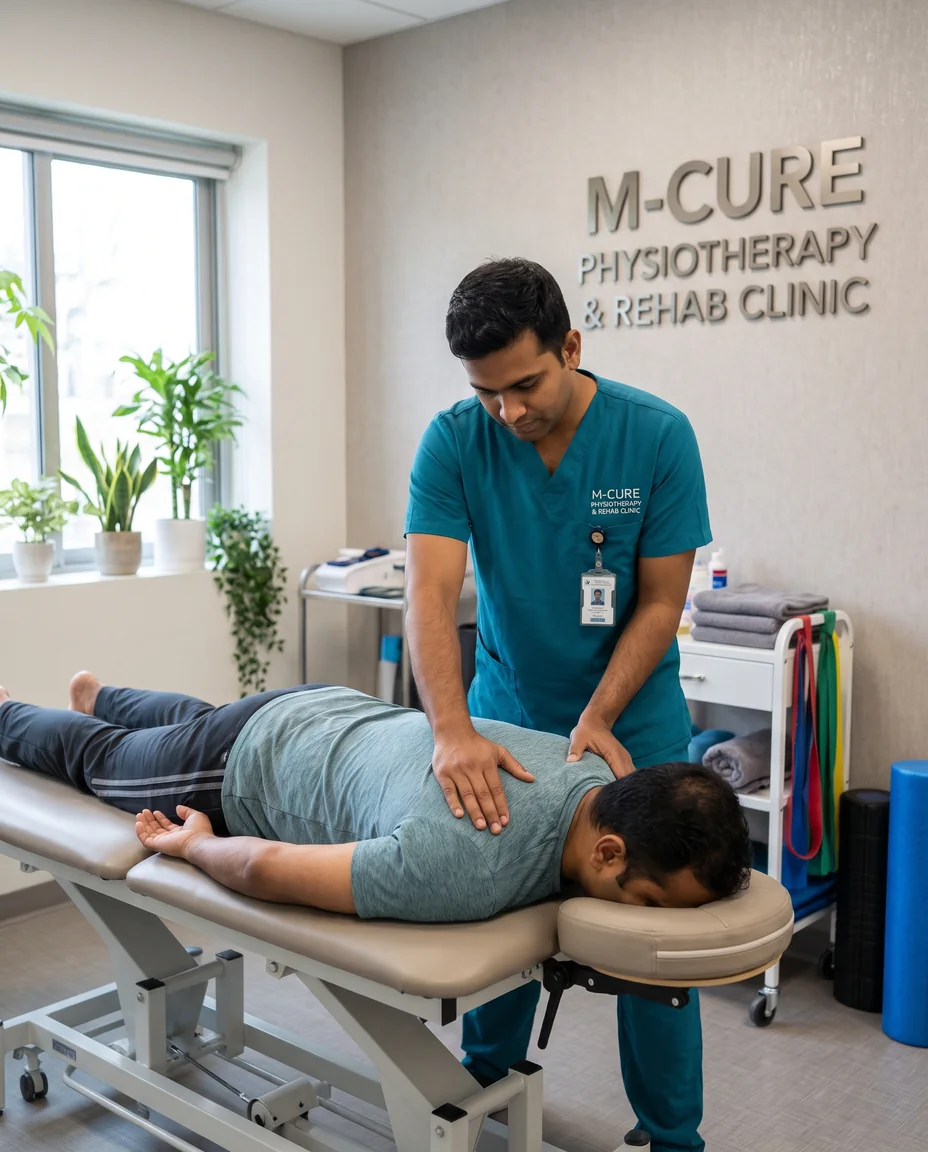
Central and peripheral neurological insults disrupt the body's communication lines. When a stroke, spinal injury, or progressive neurodegenerative disorder damages upper or lower motor neurons, conventional orthopaedic exercise protocols fall short. Recovery demands an understanding of neuroanatomy, motor learning theory, and neuroplastic reorganization. At M-CURE Physiotherapy and Rehab Clinic, located at Rama Heights on the Nashik-Pune Highway, we provide specialized neuro-rehabilitation rooted in contemporary motor control principles, task-oriented retraining, and neuromuscular facilitation.

Serving patients and families across Moshi, Spine Road, Sector 4 PCNTDA, Bhosari, Chikhali, Charholi, and Alandi, our clinic delivers structured outpatient neurological therapy (along with dedicated home rehabilitation for mobility-compromised patients) to bridge the transition from acute hospital neurology wards to confident, active community living.

Neuroplasticity & Modern Motor Re-Education

For decades, medical doctrine held that adult neurological damage was permanent. Modern neuroscience has disproven this through the discovery of neuroplasticity—the central nervous system’s lifelong biological capability to structurally and functionally reorganize itself in response to learning, environmental stimulation, and repetitive, purposeful physical practice.

Cortical Remapping

When a localized cerebral infarction (ischemic stroke) or hemorrhage damages the primary motor cortex, adjacent, undamaged regions of the cortex and homologous pathways in the opposite hemisphere can take over motor command execution. However, this cortical remapping does not occur through passive rest or random movement. It demands:

  • 1. High-Repetition Task Specificity. Practicing exact, real-world functional tasks (such as reaching, grasping, rolling, and step-initiation) rather than non-functional muscle twitches.
  • 2. Salience & Cognitive Engagement. Exercises that require focus, problem-solving, and error-correction to drive synaptic remodeling.
  • 3. Overcoming Learned Non-Use. Preventing patients from relying entirely on their unaffected side, which suppresses and degrades neurological representations of the affected limb in the brain.

Managing Upper Motor Neuron Syndrome (Spasticity vs. Weakness) Neurological damage often manifests as upper motor neuron syndrome, characterized by a loss of descending inhibitory signals. This results in hyperactive deep tendon reflexes and velocity-dependent resistance to passive stretch, known clinically as spasticity. If left untreated, spasticity forces the limb into pathological patterns (such as an internally rotated, flexed arm or an extended, inverted "equinovarus" foot), leading to permanent soft-tissue contractures. At M-CURE, our neuro-physiotherapists systematically inhibit spasticity while activating inhibited antagonist muscles to restore balanced motor control.

Comprehensive Spectrum of Neurological Conditions Managed at M-CURE Moshi

Our specialized neuro-rehabilitation team designs tailored treatment programs across a broad range of acute, chronic, and degenerative neurological conditions:

Stroke Rehabilitation (Ischemic & Hemorrhagic CVA). Targeted functional recovery for hemiplegia and hemiparesis. We focus on early trunk control, rolling, sit-to-stand transitions, upper-limb reach and grasp recovery, and symmetrical gait re-education.
Parkinson’s Disease & Atypical Parkinsonism. Evidence-based movement therapies targeting bradykinesia (slowness of movement), resting tremors, postural instability, and freezing of gait (FOG) through high-amplitude movement training, auditory cueing, and balance perturbation.
Traumatic Brain Injury (TBI) & Concussion Syndromes. Managing post-injury balance loss, vestibular-ocular tracking dysfunctions, motor coordination deficits, and functional deconditioning.
Spinal Cord Injury (Incomplete SCI & Paraplegia). Progressive neurological reconditioning, wheelchair mobility, functional floor-to-standing transfers, and bodyweight-supported standing frame therapy.
Bell’s Palsy & Facial Nerve Neuropathies. Targeted neuromuscular facial re-education, surface biofeedback, and selective muscle activation to prevent asymmetric contractures and synkinesis (unwanted involuntary facial movements).
Guillain-Barré Syndrome (GBS) & Acute Inflammatory Demyelinating
Polyneuropathy. Careful, non-fatiguing progressive motor re-education during the recovery plateau to rebuild peripheral muscle capacity without triggering neurological exhaustion.
Peripheral Neuropathies (Diabetic, Toxic & Idiopathic). Proprioceptive re-weighting, dynamic balance retraining, and ankle-foot orthotic (AFO) fitting to counteract sensory loss and drop foot.
Cerebellar Ataxia & Balance Disorders. Sensory compensation strategies, frenkel’s coordination exercises, and weighted vest protocols to stabilize intentional tremors and wide-based, uncoordinated gait.
The M-CURE 4-Phase Neurological Rehabilitation Framework

Neurological recovery is a gradual journey that requires objective clinical tracking. Every neuro patient at M-CURE is guided through four progressive phases:

1

Comprehensive Neuro-Functional Diagnostic Evaluation

Before designing a protocol, our clinical team maps the patient's neurological baseline using validated outcome measures:

  • Tone & Spasticity Assessment. Grading spasticity across all major muscle groups using the Modified Ashworth Scale (MAS).
  • Functional Motor Recovery Staging. Evaluating voluntary control out of synergistic movement patterns using the Brunnstrom Stages of Motor Recovery.
  • Objective Balance & Fall-Risk Screening. Administering the Berg Balance Scale (BBS) and the Timed Up and Go (TUG) test.
  • Gait Kinematics Analysis. Evaluating step length asymmetry, foot clearance, pelvic circumduction, and reliance on compensatory mechanisms.
2

Tone Normalization, Soft-Tissue Protection & Trunk Control

To enable clean movement, abnormal muscle tone and trunk instability must be addressed first:

  • Spasticity Inhibition & Prolonged Stretching. Utilizing sustained inhibitory weight-bearing postures, passive muscle lengthening, and positioning splints to prevent tendon contractures.
  • Proprioceptive Neuromuscular Facilitation (PNF). Diagonal movement patterns (D1/D2 flexion-extension) paired with rhythmic initiation to facilitate coordinated neuromuscular firing.
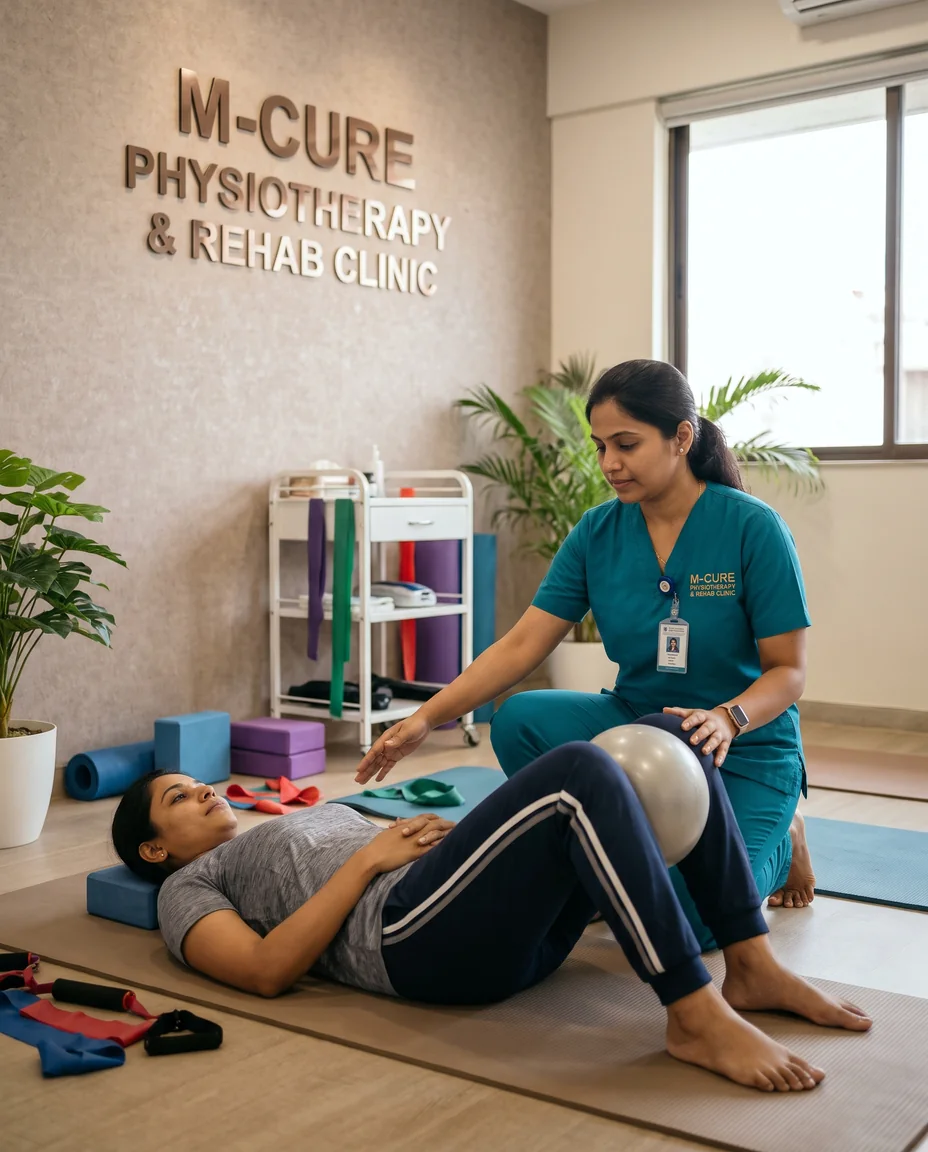
  • Core & Trunk Stability Retraining. Dynamic sitting and pelvic tilting drills on stability balls and Bobath therapy mats to establish the core stability needed for distal arm and leg movement.
3

Task-Oriented Motor Retraining & Overcoming Learned Non-Use

Once trunk stability is established, therapy progresses to complex functional motor tasks:

  • Repetitive Functional Task Practice. Structured reach-to-grasp tasks, manipulating real-world objects of varying sizes, weights, and textures to stimulate cortical reorganization.
  • Constraint-Induced Movement Therapy (CIMT) Principles. Encouraging focused use of the affected upper limb during functional tasks to overcome learned non-use.
  • Bodyweight-Supported Gait Retraining. Utilizing parallel bars, specialized bodyweight harnesses, and visual floor-stepping targets to retrain stance-phase hip extension, swing-phase knee flexion, and heel-strike mechanics.
4

Dynamic Balance, Fall Prevention & Community Independence

The final phase prepares the patient for confident, safe ambulation in real-world environments:

  • Reactive Balance Perturbations. Gentle, unexpected manual perturbations during standing and walking to train rapid postural recovery strategies (ankle, hip, and stepping strategies).
  • Dual-Task Cognitive-Motor Integration. Challenging the patient to walk while carrying objects, turning their head, or engaging in conversation to replicate everyday community conditions.
  • Mobility Aid Optimization & Caregiver Training. Fitting and fine-tuning ankle-foot orthoses (AFOs), quadripods, or walkers, while providing families with safe handling and transfer techniques.

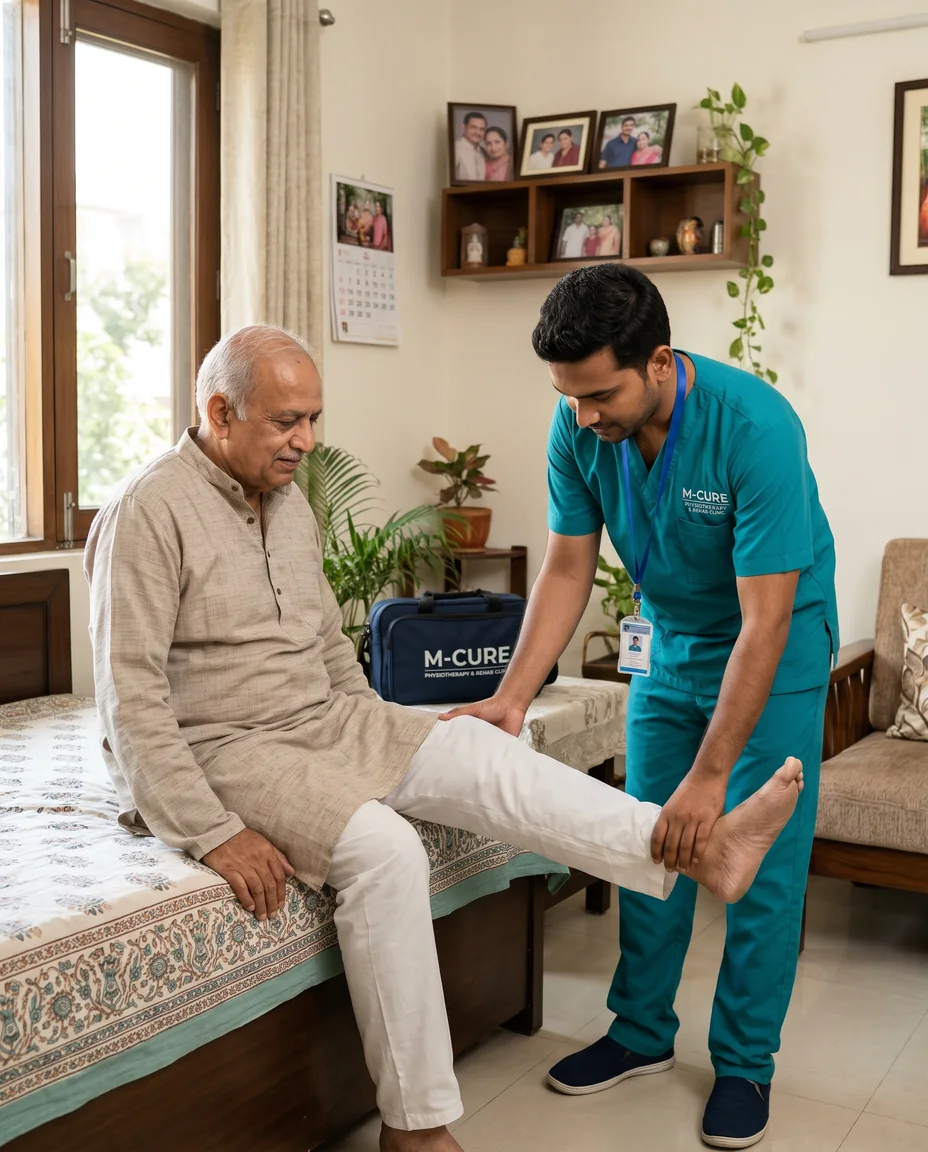
Specialized Home-Visit Neuro-Rehab Across Moshi & PCMC

For many individuals recovering from recent strokes, severe paralysis, or advanced Parkinson’s disease, traveling to an outpatient clinic is physically exhausting or logistically challenging. M-CURE Physiotherapy and Rehab Clinic operates a dedicated Home-Visit Neurological Team serving Moshi, Spine Road, Bhosari, Chikhali, Charholi, Alandi, and Dighi. Our physiotherapists bring clinical equipment, balance devices, and electrical stimulation units

  • directly to the patient's bedside. Home sessions focus on practical living skills. safe bed mobility, toilet and chair transfers, home hazard modifications, and caregiver training, ensuring recovery begins safely within the patient's daily environment before transitioning to our clinic.

Why Moshi & PCMC Families Trust M-CURE for Neurological Care

Evidence-Based Motor Learning Approaches. We bypass outdated, passive approaches in favor of active, high-repetition task-oriented training grounded in modern neuroplasticity research.
One-on-One Dedicated Clinical Attention. Neurological rehabilitation requires constant observation, tactile cueing, and physical spotting. Every session provides 45 to 60 minutes of uninterrupted, therapist-led care.
Ground-Floor, Step-Free Clinic. Located at Rama Heights, Plot No. 278, on the Nashik-Pune Highway near Aahar Veg Restaurant in Sector 4 PCNTDA, our clinic offers step-free wheelchair access, wide doorways, accessible restrooms, and dedicated support.
Collaborative Multidisciplinary Approach. We work in close communication with referring neurologists, neurosurgeons, and physicians across PCMC and Pune, aligning clinical therapy with pharmacological management.

Frequently asked questions

What is neuroplasticity, and how does it drive stroke and paralysis recovery?

Neuroplasticity is the central nervous system’s biological capacity to reorganize its structure, functions, and neural connections in response to intensive rehabilitation. When a stroke or brain injury damages a specific cluster of motor neurons, those pathways are lost, but the surrounding brain tissue remains viable. By performing repetitive, task-specific, and challenging physical exercises, physical therapy stimulates undamaged brain areas to build new neural pathways and take over control of paralyzed or weakened limbs.

Can a stroke patient still make meaningful physical progress years after the stroke occurred?

Yes. While the fastest rate of spontaneous neurological recovery occurs within the first 3 to 6 months post-stroke, scientific research has proven that neuroplasticity remains active throughout life. Chronic stroke survivors who have plateaued can make meaningful functional gains in walking balance, arm usage, and spasticity management through high-intensity, task-oriented physical therapy.

How does neurological physiotherapy help reduce muscle spasticity and stiffness?

Spasticity is managed through a combination of sustained, low-load muscle stretching, prolonged weight-bearing positions (such as supported standing), activation of opposing (antagonist) muscles to trigger reciprocal inhibition, and specialized positioning splints. These techniques help normalize hyperactive stretch reflexes, calm muscle tone, and prevent permanent joint contractures.

How does M-CURE help people with Parkinson’s disease manage their symptoms?

We utilize high-amplitude movement protocols, balance perturbation drills, and sensory cueing techniques. Because Parkinson's degrades internal movement initiation in the basal ganglia, our therapists train patients to use visual lines on the floor and rhythmic auditory cues (metronomes or rhythmic counting) to bypass damaged neural circuits, overcome freezing of gait, and maintain a safe, upright posture.

How quickly should physical therapy begin for Bell’s Palsy?

Physical therapy should begin as soon as the acute diagnosis is confirmed and medical steroid therapy is initiated—ideally within the first 48 to 72 hours. Early physical therapy helps maintain facial muscle circulation, teaches gentle manual stretches to prevent asymmetrical facial pulling, and utilizes mirror biofeedback to retrain voluntary facial symmetry while preventing synkinesis.

What causes "foot drop" after a neurological injury, and how is it corrected?

Foot drop is caused by weakness or paralysis of the tibialis anterior muscle due to disrupted motor signals through the deep peroneal nerve or corticospinal tract. This makes it difficult to lift the foot during the swing phase of walking, causing the toes to drag and increasing trip hazards. We manage foot drop using functional electrical stimulation (FES), gait re-education, and by prescribing custom-fitted lightweight Ankle-Foot Orthoses (AFOs) to ensure safe, smooth walking.

Do you provide home visits for bedridden or mobility-impaired neuro patients in Moshi?

Yes. For patients who cannot travel safely to our clinic due to paralysis, severe balance loss, or post-hospital frailty, M-CURE provides dedicated home-visit neuro physiotherapy across Moshi, Spine Road, Sector 4 PCNTDA, Bhosari, Chikhali, Charholi, and Alandi. Once a patient regains baseline transfers and functional standing stamina, therapy can transition to our outpatient clinic.

How do you assess and minimize fall risks in neurological patients?

We conduct structured assessments using the Berg Balance Scale and the Timed Up and Go (TUG) test to evaluate static and dynamic balance. Therapy addresses balance deficits through sensory re-weighting (training the brain to rely on vision and inner-ear balance when leg sensation is reduced), reactive stepping reactions, and obstacle navigation. We also assess the home environment to eliminate practical fall hazards.

What is Constraint-Induced Movement Therapy (CIMT), and when is it utilized?

CIMT is an evidence-based neuro-rehabilitation protocol designed for stroke survivors with mild-to-moderate functional return in their affected hand and arm. The patient’s unaffected arm is placed in a soft mitt or sling for several hours a day, compelling the brain to use and rewire connections to the stroke-affected limb through repetitive, functional task practice.

Can physical therapy help resolve sensory loss or numbness after nerve injury?

Yes. Sensory re-education protocols can help retrain the brain to interpret altered sensory signals. We utilize graded tactile stimulation (exposing the skin to varying textures such as cotton, velvet, and textured brushes), localization drills (identifying where the limb is touched with eyes closed), and joint position matching to rebuild sensory awareness and reduce fall risks.

Ready to Take the First Step Towards Better Movement?

Connect with M-CURE Physiotherapy and Rehab Clinic to discuss your physiotherapy and rehabilitation needs.

Visit M-CURE in Moshi

M-CURE Physiotherapy and Rehab Clinic
Rama Heights, Plot No. 278, Nashik - Pune Highway, Near Aahar Veg Restaurant, PCNTDA, Sector Number 4, Moshi, Pimpri-Chinchwad, Maharashtra 411070

+91 92841 33562

Serving Moshi, Spine Road, Bhosari, Chikhali, Charholi, Alandi, Dighi, Talawade and nearby areas.

Opening hours: [to be confirmed by the clinic]

Google Reviews

Read patient reviews or share your experience with M-CURE.

View on Google
WhatsApp
CallWhatsAppBook Appointment