How soon should physiotherapy start after Total Knee Replacement (TKR)?
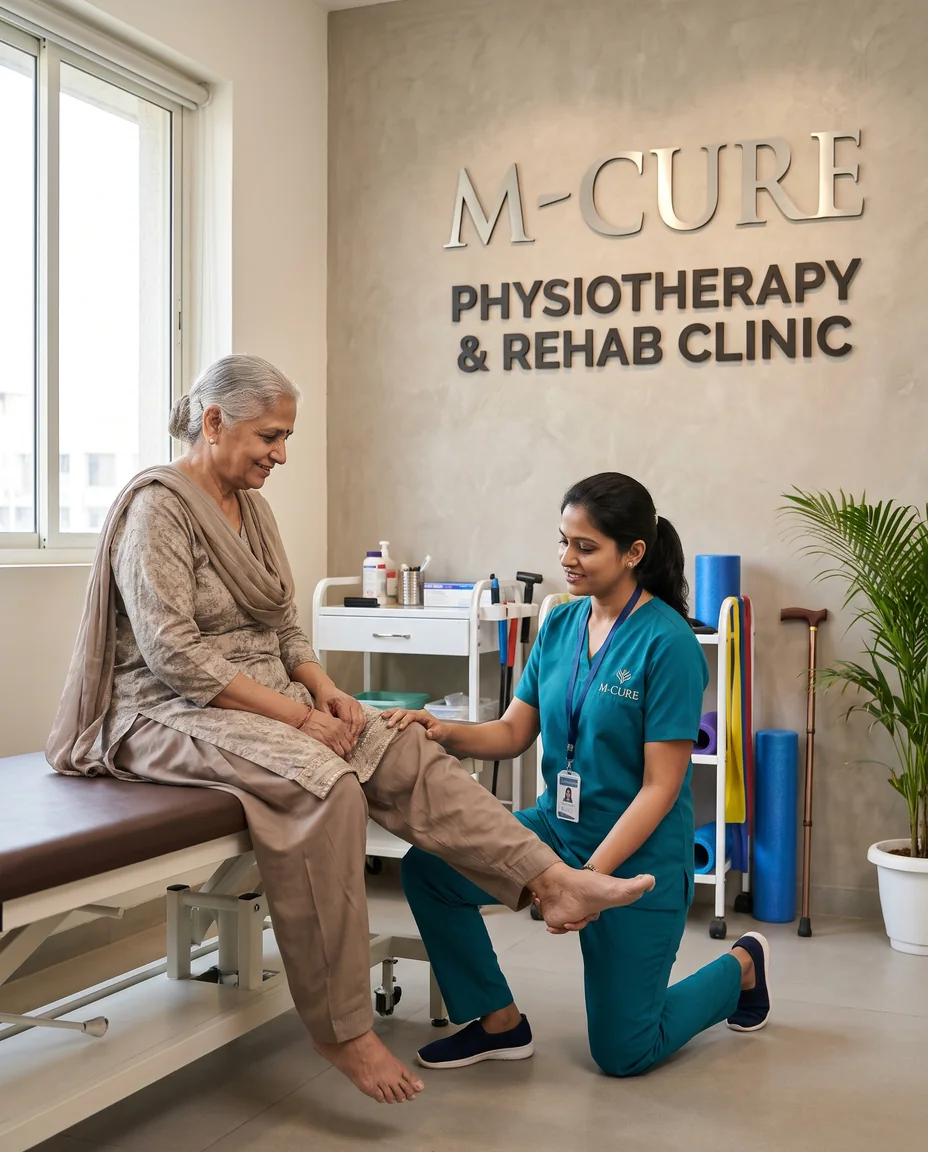
Bedside physical therapy begins within 24 hours of surgery in the hospital setting to initiate circulation and basic ankle pumps. Formal outpatient physiotherapy at M-CURE (or through our home physiotherapy service) should begin immediately upon hospital discharge—typically between days 3 and 5 post-op. Delaying structured therapy allows internal swelling to turn into stiff fibrous adhesions, making it far more difficult to achieve full knee bending and straightening later.
Why is post-surgical scar tissue mobilization necessary?
As surgical incisions heal, the body lays down collagen haphazardly, forming dense, sticky scar tissue that can tether the skin, fascia, and underlying muscle bellies together. If left unmobilized, these adhesions act like a tight mechanical band across the joint, causing pain and restricting movement. Gentle, skilled scar mobilization performed once incisions are fully closed ensures normal tissue gliding and prevents permanent stiffness around the joint.
How long does rehabilitation take following a rotator cuff repair?
Tendons heal slowly back into their bony insertion sites. To protect the surgical anchor sutures, the arm is kept in an abduction sling with only gentle passive range-of-motion exercises permitted for the first 6 weeks. Active-assisted and active movement begins around weeks 6 to 8. Progressive strengthening starts around week 10 to 12, with full functional overhead reach and strength returning over 4 to 6 months.
Can post-operative physiotherapy be done at home in Moshi?
Yes. For patients who find vehicle transfers, bumps, and clinic travel painful or difficult during the initial weeks following surgery, M-CURE provides comprehensive home physiotherapy across Moshi, Spine Road, Bhosari, Chikhali, Charholi, and Alandi. Once your mobility, balance, and stamina improve, care can be transitioned to our clinic to access advanced rehabilitation equipment.
How do you keep therapy comfortable after surgery?
We do not believe in aggressive, forced movements that trigger protective muscle spasms. We use cold therapy, manual lymphatic drainage, and gentle physiological joint glides to calm the surgical site before exercising. Every movement is adjusted to your tissue tolerance and physiological limits, keeping rehabilitation within a safe, comfortable, and productive range.
What knee bend angle should I aim for after knee replacement surgery?
The primary functional milestone is achieving at least 110 to 120 degrees of knee flexion (bending) and 0 degrees of full knee extension (complete straightening). Achieving 0 degrees of extension is critical for a smooth, limp-free walking gait, while 110 to 120 degrees of flexion allows you to sit comfortably in chairs, navigate stairs step-over-step, and get in and out of cars without straining.
Is swelling normal several weeks after joint surgery?
Yes. Mild to moderate swelling can persist for 3 to 6 months following joint replacement or reconstructive surgery as the body builds new microvascular networks. However, excessive swelling must be managed because it shuts down muscle activation. We use active calf-muscle pumps, therapeutic elevation, compression garments, and gentle manual drainage to keep fluid levels controlled.
What precautions should I take after a Total Hip Replacement?
Precautions depend on whether your surgeon used a posterior or anterior surgical approach. For a posterior approach, you must avoid flexing the hip past 90 degrees, crossing your legs, or twisting your foot inward for the first 6 to 12 weeks to prevent prosthetic dislocation. We teach you safe, practical strategies for getting in and out of bed, using the toilet, dressing, and getting into cars while protecting your new hip.
Why is it hard to lift my leg straight after knee surgery?
This common issue is known as arthrogenic muscle inhibition (AMI). Swelling and surgical trauma inside the knee reflexively cause the central nervous system to turn down motor signals to the quadriceps muscle. We use gentle Neuromuscular Electrical Stimulation (NMES) combined with targeted motor-retraining drills to help your brain reconnect with the quadriceps and restore a strong straight-leg raise.
When will I be able to walk without a walker or cane?
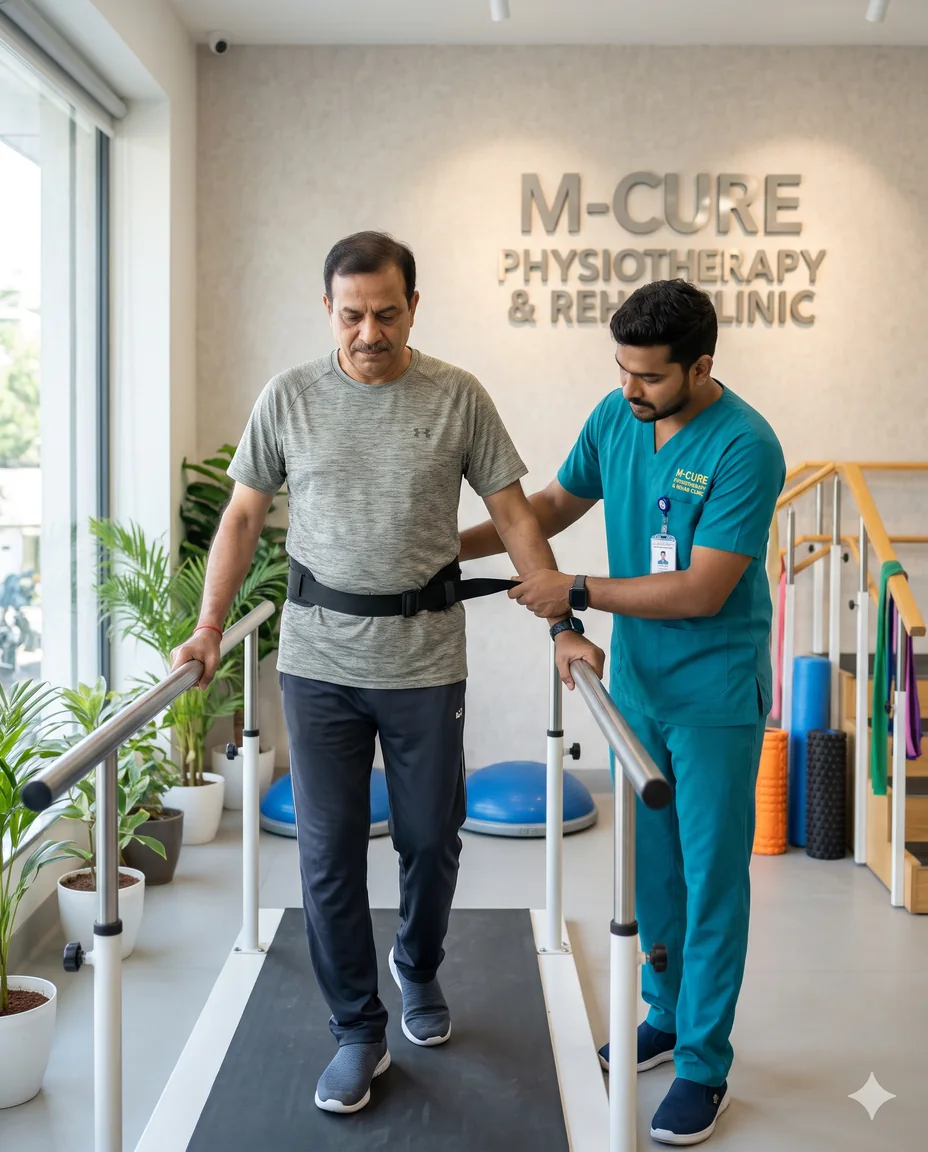
Most patients transition from a four-legged walker to a single elbow crutch or walking stick between weeks 2 and 4 post-surgery. Progression to unassisted, limp-free walking typically occurs between weeks 4 and 8, once your quadriceps, gluteal stabilizers, and single-leg balance reach the objective strength thresholds required to walk safely without compensating.